
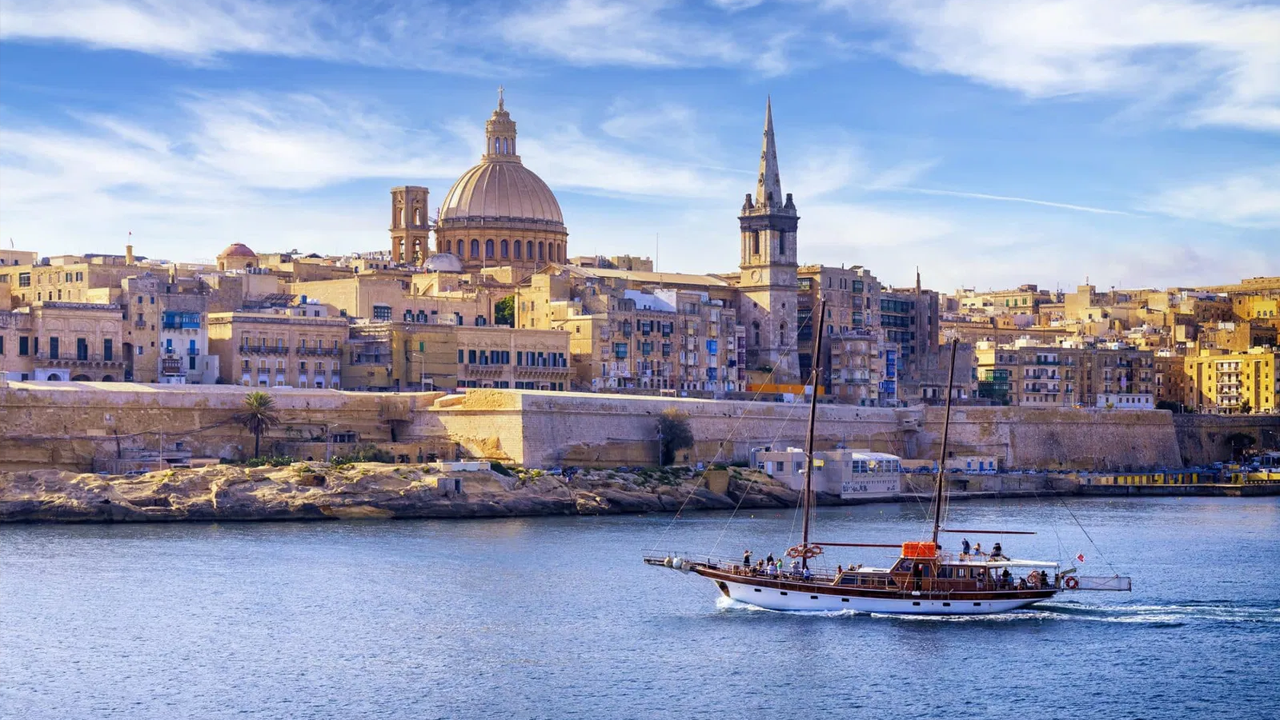
Malta Permanent Residence Program (MPRP) stands as its primary distinctive feature because it supports business-oriented individuals and entrepreneurs.
Malta’s strategic location in the Mediterranean creates an excellent opportunity for people to make it their second residence. The country offers attractive natural beauty and a comfortable climate as just a few of its various attractions.
Malta, a member of the European Union, maintains a stable political climate, a thriving economy, and a top-ranked global banking system.
The number of nations implementing citizenship by investment programs has increased in recent years, but Malta stands as one of the most well-known programs. The country offers investors a streamlined method to gain legal residence and work authorization throughout its territory.
The MPRP serves as a valuable choice for foreign investors who seek European operations, residency, or business opportunities in the region. The Maltese government has recently introduced program changes to boost both accessibility and investor interest.
In this guide, we provide a comprehensive guide to the MPRP, highlighting the investment routes, benefits, eligibility criteria, required documents, and the major changes that have been announced.
Overview of Malta’s Program
- The Malta Permanent Residence Program, which started in 2015, enables non-EU/EEA/Swiss investors to obtain European residence permits in EU countries. The program allows investors to live in the country and visit the Schengen Area for three months every six months while expanding their business operations in Europe.
- The residence card should be renewed every five years.
- The residence permit requires investors to fulfill four essential requirements, which include buying or renting a Maltese property, making a non-returnable contribution and administrative fee payment, as well as a charitable donation to a Maltese non-government organization.
- The main applicant needs to demonstrate bank account capital through two possible options , which require either €500,000 total assets with €150,000 liquid financial assets or €650,000 total assets with €75,000 liquid financial assets.
- The permanent residency application of the investor allows the inclusion of spouse or partners, together with children, parents, and grandparents.
Major Changes in Malta’s PRP
The government has announced a set of enhancements to the program, marking a major shift in the investment migration landscape. These changes include[1]:
- Regulation and Licensing of Agents:
The Residency Malta Agency now requires licensing for agents who handle program applications instead of Agenzija Komunita Malta.
The new licensing requirements for agents include being either a lawyer, or accountant, or a financial advisor while also fulfilling due diligence standards and insurance requirements, and other regulatory standards.
- New Regulatory Requirements:
The new licensing procedures for agents require improved due diligence, standards, and documentation requirements.
The RMA has the authority to revoke or suspend licenses when agents fail to follow regulations or demonstrate misconduct. The Agency requires agents to inform them about license surrender plans and to properly handle client transfers.
- Changes to Dependants’ Definitions and Fees
The government has adjusted the MPRP fee structure to offer better pricing options for families who select rental properties. Main changes include:
- A Unified Contribution Structure: the contribution amount is now €37,000 for the main applicant, whether renting or owning a qualifying property. The previous rental property applicants paid €60,000 while the property purchase applicants paid €38,000.
- The government has eliminated the previous €10,000 contribution requirement for each spouse and minor child in the family while setting the fee for additional adult dependents at €7,500. The amendment decreased the total cost of family applications.
- The administration fee now consists of a non-refundable €60,000 payment, which applicants must pay €15,000 at application and €45,000 after receiving approval.
| Fee | New Cost |
| Fee for each adult dependent (except spouse) | €7,500 |
| Fee for each additional dependent added after issuance of Certificate | €7,500 |
| Fee for each additional dependent added after issuance of Certificate | €60,000 |
| Contribution of the main applicant, whether purchasing or leasing the qualifying property | €37,000 |
Therefore, the total capital outlay for families to acquire a permanent residence is around €100,000, excluding the property lease or purchase.
New fees and contributions apply to all applications submitted after 1 January 2025, even if they are still being processed.
- Temporary Residence Permits:
The new policy enables applicants together with their dependents to obtain one-year temporary residence permits, which extend annually until their application reaches completion.
The applicant onboarding process begins with the licensed firm, which then submits the full application file to the Residency Malta Agency for initial visa-level assessments. The RMA issues the temporary card after completing the process and after applicants make their contribution payment.
The RMA now provides this measure because more families want to stay in Malta for an extended period to evaluate their educational and real estate choices before obtaining permanent residence. The updated policy enables families to start their new life in Malta right away without waiting for any delays.
- Use of Qualifying Property
The acquisition of property now allows applicants to lease it immediately after purchase. The program becomes more appealing to investors because this flexibility lowers the cost and enables applicants to begin earning rental income immediately until approval is received.
The rental option amendments enable applicants to sublease their property after five years; however, the subtenant should not be an MPRP applicant. This provision enables applicants to generate revenue, which enhances the property’s long-term value.
Insights about Malta’s PRP
Identity Malta[2]granted residence permits to 668 non-EU nationals during 2024. The MPRP, MRVP, and Nomad Residence Permit scheme issued 4,073 new residence permits to applicants.
The MPRP generated €46 million in consolidated funds, €50 million in five-year lease contracts , and €36 million in property purchases.
The Nomad Residence Permit scheme received 1,031 applications, while digital nomads in Malta earned an average annual salary of €76,000. The estimated economic contribution of these workers to the local economy during 2024 reached €5 million.
Major Benefits of Malta’s Permanent Residence Program
Malta Permanent Residence offers many benefits in exchange for an investment that contributes to the nation’s economy. These benefits include:
- Rights to live, work, and study in Malta
Malta’s permanent residence is valid for life; therefore, investors holding this permit can move to live in Malta while working and pursuing studies. Family members will maintain permanent security through this program because they will have the same access to Maltese public education as native residents. State education , school transport, and books become available at no cost to students.
Malta is one of the EU’s fastest-growing economies. The World Justice Project ranking places Malta around the 10th position for safety, behind countries known for their high levels of security, such as Luxembourg, Singapore, and Japan. The country also has one of the lowest crime rates in the European Union. Therefore, investors have an excellent chance to start or expand their business.
- Visa-free Travel to the Schengen Zone
Permanent residency holders can take advantage of unrestricted movement between the 26 Schengen Area countries because there are no border controls or customs inspections, with a stay of up to 90 days out of 180. Passport holders who gain citizenship can enter 186 countries visa-free. Malta’s passport is ranked 7th worldwide, allowing its holders to enter the USA with an ETA visa.
- A Safe and High-Quality Life for Families
The residents of Malta experience an outstanding quality of life because the country provides them with clean air, robust property rights, and complete freedom of speech. The country’s contemporary infrastructure delivers fast internet access and secure banking facilities, which attract European tourists who want to experience its various recreational and cultural events.
- Access to World-Class Healthcare
The permanent residents of Malta can get medical treatment in Maltese clinics and study in local schools and universities. They can also access clinics and educational institutions in other Schengen countries.
The Maltese national health service[3] is financed through general taxation and offers virtually universal access to a wide package of benefits. Over the last decade, health spending in Malta has grown at one of the highest rates in the EU.
- Safe Haven
Investors are not obliged to reside in Malta to acquire or maintain permanent residency. They can establish a safe haven in Malta either by acquiring a real estate property or renting a house, or opening a bank account to transfer capital into the country.
Applicants do not need to take language tests or stay in Malta for multiple years before they can apply for permanent residence.
- A chance to become Malta’s tax resident
The tax resident status in Malta becomes available to investors who stay in the country for more than 183 days annually.
The tax system of Malta offers more benefits to investors than several other nations do. The permanent residence permit does not grant any tax benefits to investors because they must follow the standard tax rules of the country.
- Family Inclusion
Investors can include their spouses, children, parents, and grandparents in their application.
- Robust Economy
Malta’s economy continues its strong economic growth and is expected[5] to outperform other member states in 2024 and 2025. GDP growth is expected to reach 4.6% in 2024 and 4.3% in 2025, driven by net exports and private consumption. In 2023, inflation, as measured by the harmonized index of consumer prices, reached 5.6% with energy prices being kept at 2020 levels. Inflation in 2024 and 2025 is forecast at 2.8% and 2.3% respectively, with continuing pressures in food and services prices, while retail energy prices are set to remain stable. The tourism sector continues to rebound strongly, exceeding pre-pandemic levels and having further growth prospects.
- Excellent Connections
Malta stands out for its perfect climate, welcoming residents, low crime rates, and high standard of living. The country provides perfect conditions for people who want to obtain alternative residency or purchase a second home. The island has excellent air and sea connections to Europe, Africa , and Asia, making it highly accessible. The country has a strong international school system and university network, and English is the primary language spoken by its residents.
Eligibility Criteria
Foreign investors must meet specific criteria to apply for Malta Permanent Residence, and the main applicant should:
- Be at least 18 years old
- Be non-EU/EEA/Swiss Citizens
- Have no criminal record or prosecution
- Not under sanctions
- Have no visa denials in countries that have a visa-free agreement with Malta
- Capable of confirming the legality of the income
- Prove the ability to make an investment which is at least €500,000
- Medical insurance
- The spouse should provide an officially registered marriage or civil partnership with the investor
- Children under 18 can be children of the spouses, or children of one of the spouses from previous marriages, with the consent of the other parent
- Children aged 18 to 29 should be unmarried and principally dependent on the investor or the spouse.
- Parents and grandparents should be dependent on the investor or the spouse.
Investment Options
The program stipulates that investors fulfill specific mandatory requirements. It requires buying or leasing residential property, paying both administrative fees and government fees, and making a donation to a Maltese recognized organization.
The main applicant needs to prove they hold a minimum amount of capital in their bank account. Two options are available:
The applicant needs to show either a minimum net worth of €500,000 with liquid financial assets worth at least €150,000 or a minimum net worth of €650,000 with liquid financial assets worth at least €75,000.
First option: Renting Real Estate
The investor has the option to lease a residential property in Malta for at least five years with a minimum annual rental cost of €14,000. At the same time, he must pay government fees and donate to a registered charitable organization. The donation shall be paid to a local registered philanthropic, cultural, sport, scientific, animal welfare, or artistic non-governmental organization or society registered with the Commissioner for Voluntary Organizations.
Investors who want to keep their residential permit valid must maintain a rental property in Malta after completing their five-year residence period. However, the rental value requirement no longer exists after the five-year period.
| Rental Cost for 5 years | Minimum €70,000 |
| Contribution Fee | €37,000 for the investor and €7,500 per each family member |
| Administration fee | €60,000 for the investor split to €15,000 upfront and €45,000 upon approval |
| Charitable donation | €2,000 |
| Total Minimum Cost | €176,500 |
Second Option: Purchasing Real Estate worth €375,000
The investor also has the option to buy residential property in Malta. He should pay government fees while also contributing to a registered charitable organization . The minimum purchase price is €375,000, with additional fees amounting to approximately 7% of the property’s value.
The property must be held for at least five years, and according to the new amendments, it can be rented out.
| Purchase of Real Estate | €375,000 + at least €26,250 on fees |
| Contribution Fee | €37,000 for the investor and €7,500 per each family member |
| Administration fee | €60,000 for the investor split to €15,000 upfront and €45,000 upon approval |
| Charitable donation | €2,000 |
| Total Minimum Cost | €472,000 |
Cost Of Malta’s Permanent Residence Program
Final costs may differ depending on the actual property price, number of family members, and other associated costs. Below are some additional costs associated with the property, administration, and contribution fees.
| Investor | Couple | |
| Residence Card Fee for 5 years | €140 | €275 |
| Document Translation | €5,000 | €5000 |
| Health Insurance | €500 | €1000 |
Requirements and Documents
The program requires applicants to meet certain criteria and submit the documents[6] below:
Conduct Certificate:
- The main applicant and any dependent older than 14 years need to present this document.
- The certificate needs to come from both the home country and any nation where the applicant lived for more than six months during the previous ten years.
- The authorities will accept an affidavit stating a clean criminal record in exceptional circumstances when the certificate is unavailable.
- The applicant needs to provide the certificate before obtaining approval in principle, but can submit it at a later time.
Due Diligence (KYC):
- The agent needs to verify that there exists no previous records showing the applicant or dependents to be unfit or improper persons.
Property Commitment:
- The applicant must sign a document to purchase or lease a property that fulfills the residential requirements in Malta.
- The purchase of property serves as evidence to demonstrate asset ownership according to Regulation 9(2).
Financial Commitments:
- The applicant must sign an agreement to fulfill the required contribution.
- The applicant must make the required donation.
Health Confirmation:
- The applicant and dependents need to show they have good health and no serious illnesses or contagious diseases; therefore, they do not require excessive healthcare from Malta.
All forms and documents must be in English or accompanied by an authenticated English translation. The main applicant must provide an affidavit confirming financial support for all dependents over 18 (excluding spouse).
For minor dependents, forms must be signed by both parents. If one parent has sole custody or another person has legal guardianship, that individual must sign and provide proof of legal authority.
Providing false statements or withholding information may result in application refusal.
Steps and Timeline
The process to obtain Malta’s permanent residence follows a well-defined and clear path, which usually requires 15 months to complete. Below are the steps required:
Step 1: Initial Due Diligence Process
The Malta Permanent Residence Programme depends on due diligence to evaluate investor eligibility for residency.
The licensed agent moves forward to sign a service agreement with the investor after completing the background check successfully.
Step 2: Document Preparation and Application Submission
The agent’s team helps investors create a complete list of necessary documents while assisting them through the preparation process. The team collects background information from investors while translating documents into English and performs notarization of certified copies, and completes all application forms correctly.
The lawyers submit the complete application to the Residency Malta Agency after all documents are ready. The main applicant must pay a non-refundable administrative fee of €15,000 at this stage.
Step 3: Due Diligence
The Residency Malta Agency performs extensive due diligence assessments on every person who applies. It sometimes requires additional information from investors about their business activities and financial standing during specific evaluation processes.
The authorized agent prepares the required documentation and reviews it with the investor for approval, and then delivers the final materials to the agency on behalf of the investor.
Step 4: Meeting Investment Requirements
After the Residency Malta Agency issues the Letter of Approval, the investor must fulfill all investment requirements before the specified deadline.
The investor needs to pay the remaining €45,000 administrative fee within two months after receiving approval. He must finalize property acquisition or rental and payment of contribution and charitable donation within eight months.
The RMA receives all necessary supporting documents from the authorized agent after all conditions are fulfilled.
Step 5: Residence Card Issuance
After fulfilling all the requirements, the RMA issues the residence certificate within 7 days.
Step 6: Biometrics
Biometric data must be provided in person at the RMA. All applicants and dependents are required to attend, except for children under the age of two, who are exempt from this requirement.
Step 7: Obtaining Permanent Residence Cards
The RMA issues the Certificate of Residence together with permanent residence cards and delivers it directly to authorized agents. The investor receives these documents through courier services, so they do not need to travel to Malta for document collection.
Adult applicants receive permanent residence cards that remain valid for five years. The cards of minor applicants need to be renewed before their 14th and 18th birthdays.
Step 8: Annual Compliance Review
The RMA performs annual compliance checks during the first five years of permanent residence to verify that investors maintain all program requirements. It verifies that the investor maintains ownership or rental of qualifying residential property in Malta and holds the necessary minimum assets.
Frequently Asked Questions
- Can foreign investors get a permanent residence in Malta?
Foreigners can get permanent residency in Malta through both country residence for over five years and participation in the Malta Permanent Residence Program (MPRP).
The MPRP accepts non-EU, non-EEA, and non-Swiss nationals who fulfill these conditions:
- Be at least 18 years old.
- The candidate should hold an untarnished criminal history. He shouldn’t have any ongoing court proceedings, denied visas, or financial penalties.
- Ownership of assets reaches at least:
o A minimum of €500,000 must be invested , with €150,000 in liquid assets.
o The investor needs to invest €650,000 with €75,000 in available cash.
Eligible family members include the investor’s spouse, unmarried children under 29, parents, and grandparents.
- How much time does it take to get Malta’s permanent residency?
The duration needed to acquire permanent residency in Malta depends on multiple elements, like document preparation, property acquisition, and investment standards.
After presenting the complete application, it will take at least six months to process the request. The residence card processing time extends beyond the initial processing period and may require additional time for final approval.
- Who is eligible for the Malta Permanent Residence Program?
All individuals who have reached the age of 18 can submit their application if they fulfill these requirements:
- Legally sourced income.
- No criminal record.
The candidate cannot have been rejected for any visa in countries that offer visa-free travel to Malta.
The applicant must present assets that amount to either:
o €500,000 combined with €150,000 in liquid assets, or
o €650,000 together with €75,000 in liquid assets.
Family members who qualify to join the application under this programme include:
- Spouse or partner.
- Unmarried children under 29.
Family members who are financially dependent on the main applicant can include grandparents and parents.
- Can Family Members Be Added Later?
The main applicant who received permanent residence can apply to add more family members after receiving their residency status. Eligible individuals include:
- Spouse,
- Children or grandchildren,
- Daughters-in-law or sons-in-law,
- Parents or grandparents.
The fees for family member addition follow this structure:
The application fee for spouse, parent, grandparent, daughter-in-law, or son-in-law amounts to €7,500.
The fee structure includes €5,000 for each unmarried child between 18–29 years old and minor grandchild. The application fee for minor children and children with disabilities remains at zero.
- Is It Possible to Recover the Investment?
The investor can recover part of the investment through certain components. He can sell the real estate property and recover the investment after five years.
Non-refundable costs include:
- Administrative fees
- Government contributions
- Charitable donations
The rental costs of property (if applicable), along with administrative fees, government contributions, and charitable donations.
- How to Maintain Permanent Residency in Malta?
The RMA checks annually for the first five years to verify that:
- The applicant must keep their qualifying property either rented or owned in Malta.
- The applicant must maintain the required financial asset level.
After five years, investors have the freedom to dispose of their property assets. They must maintain a registered address in Malta through rental or ownership, but there will be no minimum price.
For more information about Malta Permanent Residence Permit programs, please contact us via WhatsApp.
[1] https://residencymalta.gov.mt/wp-content/uploads/2025/07/L.N-146-of-2025.pdf
[2] https://businessnow.mt/maltas-residency-programmes-generate-e132-million-for-economy-in-2024/
[3] https://eurohealthobservatory.who.int/publications/m/malta-country-health-profile-2023
[4] https://economy-finance.ec.europa.eu/document/download/b8357ca1-e31e-4a3a-b7e4-25ebf8d01121_en?filename=SWD_2024_618_1_EN_Malta.pd
[5] https://residencymalta.gov.mt/wp-content/uploads/2025/02/S.L.-217.26-MPRP-Regulations-Updated-Version.pdf