

The Portugal Golden Visa is considered one of the most attractive residency by investment programs in Europe, offering a pathway to permanent residency, citizenship, and access to the Schengen Area.
This guide provides a comprehensive and up-to-date overview of the available investment routes, application requirements, benefits, and all key details related to the program.
Whether you are a potential investor or exploring citizenship options, this guide serves as a primary reference.
Overview about Portugal
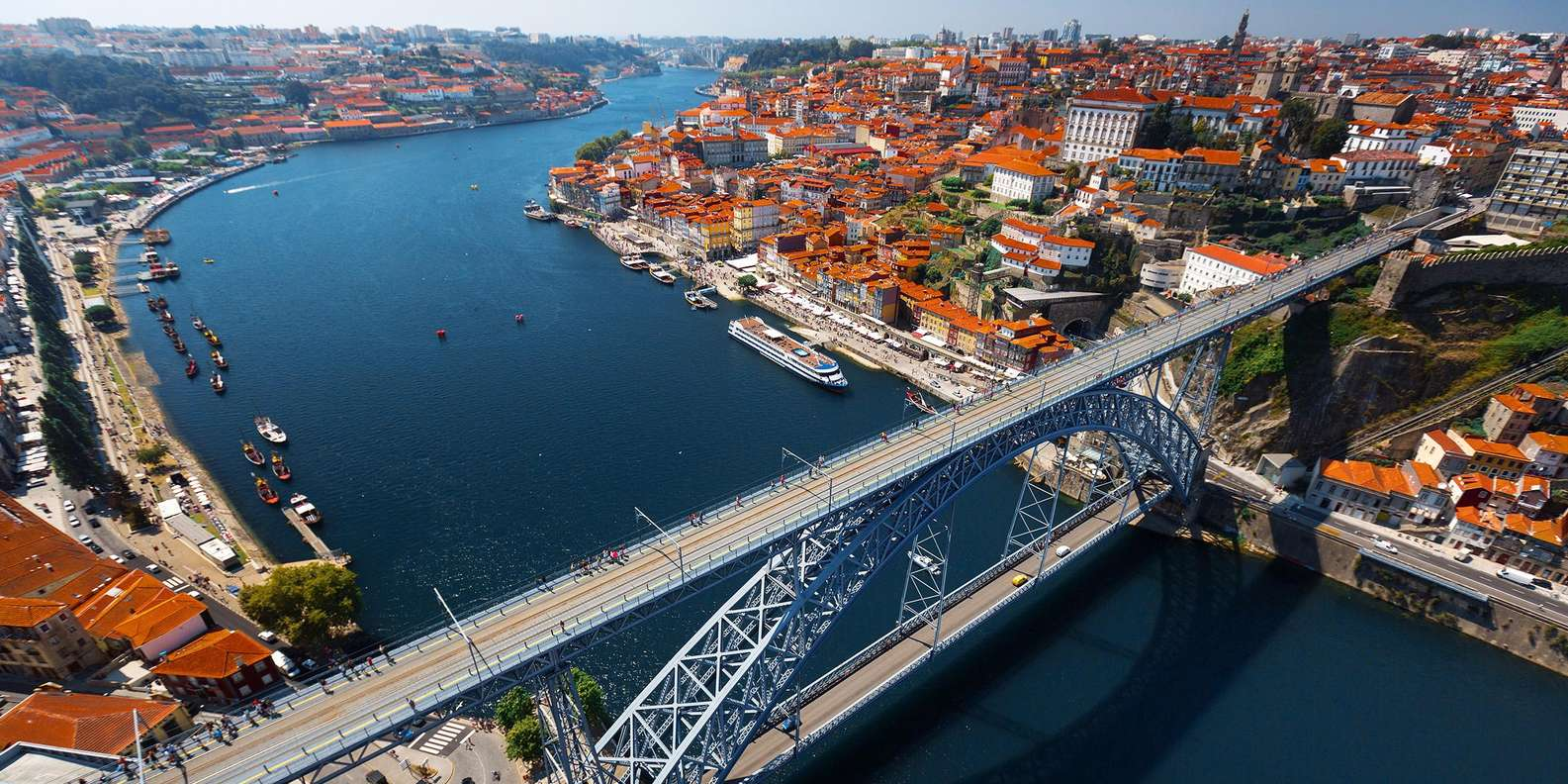
Portugal is a country located in southwestern Europe on the Atlantic coast, bordered by Spain to the north and east. Its capital is Lisbon, the official language is Portuguese, and the population is approximately 10 million.
Portugal is rich in history and culture and is known for historic cities such as Lisbon and Porto, its renowned seafood cuisine, world-famous wines, and beautiful coastlines that attract visitors from around the world.
Its economy is based on tourism, agriculture, industry, and services. Portugal is a member of the European Union and the Eurozone. It also offers the Golden Visa Program, which allows investors and their families to reside in the country and travel freely within the European Union.
What Is the Portugal Golden Visa?
| Minimum investment | €250,000 |
| Initial residence permit | Issued within a few months |
| Permanent residence | After five years |
| Eligibility for citizenship | After ten years |
| Residency requirement | 14 days every two years |
Portugal Golden Visa program, officially known as Residence Permit for Investment Activity (ARI), was launched in October 2012, with the aim of attracting foreign direct investment, particularly following the financial crisis experienced between 2008 and 2009.
Since its launch, the program has attracted approximately 13,000 investors from around the world, particularly from China, Brazil, the United States, Turkey, and South Africa.
Portugal is distinguished by its natural landscapes, long coastlines along the Iberian Peninsula, and mild climate, as well as its welcoming population and high-quality cuisine, all of which contribute to a high standard of living. This makes the Golden Visa an attractive option for investors and business owners, as it grants the right to live, work, and study while benefiting from a range of advantages.
The program offers non-European citizens the opportunity to obtain residency in Europe by investing in the Portuguese economy. Applicants typically receive their residence permit within several months after submitting the application and completing one of the approved investment options. Golden Visa holders are required to spend approximately seven days per year in Portugal to qualify for permanent residence after five years and citizenship after ten years.
Key Updates to the Portugal Golden Visa in Recent Years
2026 Updates: Amendment to the Citizenship Law
In 2026, Portugal’s citizenship framework is expected to undergo significant changes.
According to the latest updates, the primary amendment currently under discussion and nearing approval proposes increasing the required residency period for naturalization from five years to seven years for EU citizens and nationals of the Community of Portuguese Language Countries (CPLP), and to ten years for all other nationalities.
The reform also revises how the residency period is calculated, with eligibility now measured from the date the residence permit is issued rather than from the date the application is submitted. This change may effectively extend the overall timeline before applicants become eligible.
In addition, new integration requirements have been introduced, including knowledge of the Portuguese language, culture, and civic duties, along with revisions to criminal record conditions. Further restrictions apply to the granting of citizenship to children born to foreign parents unless one parent meets longer residency requirements.
2024 Updates: Faster and Clearer Application Procedures
In January 2024, the Portuguese government approved key amendments introducing restrictions on citizenship applications submitted by individuals considered security risks due to involvement in terrorism or criminal activities.
Later in 2024, the Agency for Integration, Migration and Asylum (AIMA) announced changes to the processing of Portugal Golden Visa applications, including the transition of applications to a fully electronic system through the ARI portal. Applicants are now required to submit applications online with all original and certified documents, either in English or accompanied by a certified translation, instead of the simplified copies previously accepted.
The updated procedures also require uploading all documents related to the investor and family members, with each file not exceeding 2 MB in size. After submission, analysis fees are paid and the application enters the assessment phase without a separate appointment-booking stage, as appointment notification has been integrated directly into the approval process.
Under the new procedures, the in-person appointment for biometric data collection and document submission takes place after approval, with the residence card issuance fee paid during the same appointment, rather than splitting these steps as was previously required.
2023 Updates: Removal of the Real Estate Investment Option
In late 2023, significant changes were introduced to the Portugal Golden Visa program, including the removal of real estate purchases and real estate-related funds as qualifying investment options, while maintaining other investment options eligible under the program.

Eligibility Criteria for the Portugal Golden Visa
Eligible Applicants
Pre-requisites
Individuals aged 18 and above with a clear criminal record from their home country, as well as from Portugal.
Nationalities
Any applicants who are not citizens of the EU, EEA, or Switzerland, may be eligible for the Golden Visa. Citizens of the United States, and the United Kingdom, can invest in Portugal to obtain a Golden Visa as well.
Minimum Investments Required
To acquire Portugal Golden Visa, a qualifying investment must be completed, either in a venture or private capital fund, by establishing a company and creating jobs, or by donating to the government.
Family members
Portugal Golden Visa can be extended to the applicant’s family members such as:
- Spouse
- Children under the age of 18
- Dependent children under the age of 26, provided that they are full-time students and not married.
- Parents of the main applicant, who are over the age of 65 years.
American Applicants
The Portugal Golden Visa program offers U.S. citizens the opportunity to obtain residency, with many choosing to invest in eligible private equity or venture capital funds. Investors can also use the program to expand and grow their businesses within Portugal. The country’s strategic location, mild climate, welcoming population, high quality of life, and easy access to European markets make it a preferred destination for investors.
British Applicants
British investors are seeking ways to adapt to the impacts of the UK’s departure from the European Union, particularly after losing the freedom of movement within the Schengen Area in 2021. Portugal is an attractive destination for three main reasons: the ability to travel freely across Europe, a safe and high-quality lifestyle, and the opportunity to obtain European citizenship through investment.
Major Benefits of Portugal Golden Visa

Visa-Free Travel
After obtaining the Golden Visa, investors are registered in the central Schengen system, granting them the freedom to travel and move within Europe without the need for a visa. After 10 years, applicants can apply for Portuguese citizenship and receive a passport that allows visa-free access to 191 countries worldwide.
Right to Live, Work, and Study
Golden Visa holders can enjoy a high standard of living in Portugal, with the right to work and study in the country. Investors residing year-round are required to have health insurance, giving them access to the state-funded healthcare system, public services, educational opportunities, and European labor markets.
Public schools follow the Portuguese curriculum, while British and American international schools offer various private education options. Visa holders are free to work anywhere in Portugal and can easily establish and manage their own businesses.
Strengthening Family Ties
Portugal Golden Visa program allows the main applicant to include family members in their application, including the spouse, dependent minor children, children who are studying and financially dependent on the applicant, dependent parents over 65, and minor siblings under the applicant’s guardianship. All family members receive the same rights as the main applicant.
Citizenship and Passport
After 10 years of holding the Golden Visa, investors can obtain Portuguese citizenship, granting them an EU passport and the rights of an EU citizen, including the ability to live and work in any EU member state. The Golden Visa program offers multiple opportunities for individuals and high-net-worth investors, especially those with weak passports or facing political instability in their home countries. These opportunities include business, employment, and long-term retirement planning.
To qualify for Portuguese citizenship, applicants must:
- Have no outstanding tax obligations in Portugal.
- Maintain a clean criminal record in Portugal and their country of origin.
- Pass a basic Portuguese language test at level A2.
Tax Treatment
An investor is generally considered a tax resident in Portugal if they spend more than 183 days in the country during the fiscal year. A person can also be deemed a tax resident from the first day of residence if they intend to stay permanently and is considered a non-resident from the last day in Portugal, with certain legal exceptions.
In 2024, the government introduced the new non-habitual resident system, NHR 2.0, known as the Financial Incentives for Scientific Research and Innovation (IFICI) program. It applies to individuals who:
- Become tax residents in Portugal under local law in a given year.
- Were not tax residents in Portugal during any of the previous five years.
- Have not benefited from, and do not benefit from, the previous resident or non-resident schemes.
- Engage in activities specified under the applicable legislation.
The new system imposes a 20% tax on net income from work and professional or business activities specified by law. It also provides exemptions for foreign-earned income, professional and business income, investment income, rental income, and capital gains.
Complete Application Guide for Portugal Golden Visa
Portugal Golden Visa Investment Options
To qualify for the Golden Visa Permit, applicants have the option to invest in several routes, but they must make their investment before the application is filed.
1- Fund Subscription
Applicants can invest in a qualified investment fund, such as private equity or venture capital funds, with a minimum of €500,000, excluding any fund that has direct or indirect real estate ties. This option is considered perfect for acquiring residency in Portugal because the funds are managed by fund managers who are accredited by the Portuguese Securities Market Commission.
2- Company
Applicants can qualify for the Portuguese Golden Visa by establishing a company that creates ten full-time jobs, fully complying with Portugal’s labor laws and social security system. This requirement is reduced to eight full-time jobs if the company is owned by the main applicant and is set up in a low-density population area.
The program also allows investors to either start a new company or increase the capital of an existing company in Portugal with a minimum investment of €500,000, provided that five new jobs are created, or ten existing jobs are maintained.
3- Donation
Investors aiming to gain a Portuguese residency permit can donate at least €250,000 to qualified projects in Portuguese arts or national cultural heritage reconstruction. However, the eligible project must be approved by the Portuguese government.
Investors also have the option to contribute at least €500,000 to scientific research in science or technology, conducted by public or private scientific research institutions involved in the national scientific or technological system.
It is worth noting that real estate acquisition and capital transfer no longer qualify an investor for a Golden Visa in Portugal as of October 2023.
Why Real Estate Is No Longer an Option?
Portugal removed real estate as an eligible investment option in 2023 to address the housing affordability crisis. Rising property prices and rents, driven in part by foreign investors, made it difficult for locals to afford homes. The government, led by Prime Minister António Costa, aimed to curb real estate speculation and redirect investment into more productive areas like job creation, cultural heritage, and renewable energy.
Why Fund Investment is a Good Opportunity
Investing in funds under the Portuguese Golden Visa program is considered one of the most efficient and attractive pathways compared to other investment options, as it requires a reasonable minimum of €500,000 and offers a more flexible organizational and financial structure.
This option stands out for its lower taxes and associated costs. Investments in eligible funds are not subject to property transfer tax (IMT), property tax (IMI), stamp duties, notary fees, or registration costs typically linked to direct real estate investment. Costs are generally limited to annual administrative fees, which usually range between 0% and 2%, depending on the fund’s structure.
Non-resident investors in Portugal may also benefit from full or partial withholding tax exemptions on income generated by the fund, depending on the fund type and investment structure. By contrast, rental income in Portugal is subject to a fixed tax rate of 28%, making funds a more tax-efficient option in many cases.
Additionally, Portuguese investment funds provide an effective means to diversify investments and reduce risk, as capital is deployed indirectly across multi-sector portfolios, including technology, healthcare, infrastructure, and industry, managed by licensed fund managers under the supervision of the Portuguese Securities Market Commission (CMVM).
With Portugal’s stable economy and strong regulatory and financial framework within the European Union, this pathway combines the potential for competitive returns with residency rights and freedom of movement within the Schengen Area and the EU, making it a strategic choice for international investors.
Key Benefits of Investment Funds
Diversification: In general, investing in funds allows you to spread your money across a wide range of assets, reducing the risk associated with putting all your capital into a single investment.
On the other hand, Portuguese legislation mandates funds to maintain a diversified portfolio. This means that there are limits on the percentage of the total fund that can be invested in any single asset or investment. This diversification helps spread risk across different investments within the fund, benefiting the participating investors. The annual yields and potential capital appreciation from an investment in a fund under the Golden Visa Program can be substantially higher compared to other investment options.
Professional Management: Funds are managed by experienced professionals who analyze markets, select investments, and adjust portfolios to optimize returns. This expertise can be especially beneficial for investors who lack the time or knowledge to manage their investments.
Higher Returns Potential: Funds Managers often target high-growth sectors or emerging markets, which can provide better returns compared to traditional investments.
Transparency and Regulation: Funds approved under residency-by-investment programs are regulated by financial authorities. A registered Portuguese fund is controlled by the Portuguese Securities Market Commission (CMVM), the Bank of Portugal, and the external Fund Management company, and audited by the Portuguese Tax Authorities. These stringent regulations ensure compliance with Portuguese legislation, tax laws, and the approved investment plan by the Portugal investor fund.
Access to Broader Markets: Funds often provide access to markets or assets that may be difficult or costly to invest in individually, such as international stocks or specialized sectors like technology or renewable energy.
Potential for Growth: Historically, well-managed funds have delivered strong returns over the long term, making them a viable option for building wealth.
Sharia-Compliant Funds
Some eligible investment funds under the Portuguese Golden Visa program offer structures that comply with Islamic finance principles. These funds avoid prohibited sectors such as interest-based activities, gambling, alcohol, and other non-compliant businesses. They follow asset-based and profit-sharing investment models and are typically overseen by independent Sharia supervisory boards in addition to Portuguese financial regulators.
Read also: Portugal: Prime Opportunities for Islamic Investors Seeking European Residency
Portugal Golden Visa requirements
Minimum residency requirement
The Portugal Golden Visa program has a minimal duration of stay, as its holders must stay in Portugal for a minimum of seven days on average each year.
| Validity period | Stay requirement | |
| Initial Golden Visa Residence Permit | 2 years | 14 days within 2 years |
| Subsequent Golden Visa Residence Permit | 2 years | 14 days within 2 years |
Hold the Investment For 5 years
Investors are required to provide proof of meeting the minimum investment and to maintain the investment for the duration of the Golden Visa residence permit. This requirement is essential to preserve eligibility for residency and its renewal in accordance with the applicable regulations.
Once permanent residency or Portuguese citizenship is obtained, however, investors are not required to maintain the investment. They are free to liquidate or exit the investment without affecting their legal status in Portugal.
Bank Account and NIF Number for Portugal Golden Visa
The Golden Visa Program requires that the funds used for investment be transferred from abroad. Therefore, the main applicant must first obtain a NIF, Portugal’s equivalent of a tax identification number and open a bank account.
In Portugal, getting a NIF number and creating a bank account are both quite simple processes. Investors can have an NIF number in a few days, while opening a bank account may require a couple of weeks.
How to get an NIF Number
Applicants can resort to their advisor or lawyer to apply for a Portuguese NIF or can apply for it online. They should create an account on the Portuguese tax authority’s website and provide the following information:
- Personal information, including the name, date of birth, and passport number.
- Contact information, including the email address and phone number.
- Proof of address in your home country.
Once applicants provide the required information, the Portuguese tax authority will process the request and issue a NIF number within days.
Read more: How to get a NIF number for Portugal Golden Visa?
How To Open a Bank Account
Portuguese banks, in contrast to those in other nations, make it quite simple for foreigners and non-residents to open an account. Compared to the rest of Europe, the banking and maintenance expenses are very reasonable. They should prepare the listed documents below:
- Passport or government-issued travel document
- NIF number
- Portuguese phone number
- Proof of address from the country of residence
- Proof of income/payslip
Applicants can authorize their lawyers to handle the bank account opening process on their behalf, eliminating the need for an in-person visit to the bank.
Read more: How to Open a Bank Account For Portugal Golden Visa
Documents Required for Portugal Golden Visa
Obtaining Legal Documents
Documents will be required for different stages of the application such as bank account opening, fund management on-boarding, and Golden Visa application. Check the details in the following sections.
Fees Details
Golden Visa’s Related Fees
Portuguese Golden Visa fees are payable directly to the AIMA. The cost of acquiring a Portuguese Golden Visa can range from €10,000 up to €30,000 for a family of four, considering the complete five-year span. It includes the following:
| Analysis Fee | 632.10 € |
| Concession of First Card | 6,314.20 € |
| Renewals | 3,157.80 € |
| Permanent Residence | 8,840.00 € |
Related Investment Costs
The related charges vary according to the type of investment chosen. The expenses of the most common investment type, which is the fund investment, are shown in the table below:
|
Investment Fund |
|
| Minimum investment | €500,000 |
| Fees | |
| Subscription Fee | 0 to 3% (Could be deducted from the investment amount or charged separately depending on the fund) |
| Performance fee | Not all funds charge this fee, but when applicable it’s usually around 20% |
| Management fees | 0 to 2% annually |
| Exit fees | Not applicable |
Legal Fees
The law firm selected by the applicant will determine the cost of the legal representation. However, this doesn’t include legal expenses such as certifications and translations.
Due diligence, application, and renewal processes should be handled by an experienced legal firm because the Portugal Golden Visa investment is substantial. Even if the cost of legal representation might be high, it is preferable to avoid taking a chance by hiring an inexperienced attorney.
A family of four may have to pay fees ranging from €10,000 to €30,000 throughout the full five-year period. Applicants do not have to pay this upfront but will make payments based on the application stage, renewals, and completed milestones.
Taxes: Portuguese Golden Visa Tax Implications
Legal residence is not the same as tax residency. Having a Golden Visa in Portugal does not automatically make one a tax resident of Portugal.
But even as a mere legal resident, investors will still be responsible for paying taxes on their investment in Portugal, if it brings in money. To become a tax resident, an investor must remain in Portugal for more than 183 days of the fiscal year.
Non-Habitual Resident (NHR) Tax Program
NHR program, which has been halted in Portugal as of 2024, used to provide essential tax savings to foreigners of qualifying professions, who are planning to move their tax residence to Portugal. This scheme was launched in 2009 and now holds over 10,000 applicants.
The government has announced the new NHR 2.0 program, but Parliament’s approval is expected soon. Portugal’s new NHR tax regime is called the Fiscal Incentive for Scientific Research and Innovation (IFICI) Program. The regime applies to:
- Individuals who become Portuguese tax residents, under Portuguese domestic law, in a specific year.
- Have not qualified as tax residents in Portugal in any of the previous five years.
- Do not benefit or have benefited from the NHR regime or the former resident regime.
- Carry out activities provided for in the applicable legislation.
The regime shall provide a special 20% rate on net employment income, and business and professional income from the activities identified in the applicable legislation. It also offers an exemption on foreign-sourced employment income, business and professional income, investment income, rental income, and capital gains.
Qualifying for the new tax regime is more difficult as it is reliant on your exercising one of several qualifying roles/activities in Portugal, as follows:
- Teaching in higher education and scientific investigation
- Employment technology and innovation centers
- Employment in organizations benefiting from incentives for productive investment
- Highly qualified professions
- Positions in entities recognized by AICEP, EPE, IAPMEI, or IP as being deemed relevant for the national economy
- Research and development
- Positions in start-ups
- Positions carried out by tax residents in Azores and Madeira – still to be defined under legislation
Differences between the Old and New NHR tax regime
| Conditions | NHR 2.0 (IFICI) | Old NHR tax regime |
| Residency requirement | The applicant should not have been a tax resident in Portugal for the previous 5 years | The applicant should not have been a tax resident in Portugal for the previous 5 years |
| Validity period | 10 years nonrenewable | 10 years |
| Types of income | Tax Treatment | |
| Employment income (High-Value Added Activities) | A flat rate of 20% on eligible activities | Flat rate of 20% on eligible activities + eligible entities) |
| Pension income | 10% fixed rate | 10% |
| Rental income & Royalties | There is an exemption (depending on if it is taxable abroad under the DTA or OECD Tax Model) | Exempt |
| Dividends & Interest
|
There is an exemption (depending on if it is taxable abroad under the DTA or OECD Tax Model) | Exempt |
| Capital gains | There is an exemption (depending on if it is taxable abroad under the DTA or OECD Tax Model). Gains from the sale of moveable assets are not an exemption, typically. | Exempt |
In conclusion, the new NHR regime retains exemptions based on international tax treaties such as DTA and OECD, while the old scheme offered broader exemptions. The new regime limits exemption on capital gains from the sale of movable assets, whereas the old regime fully exempts capital gains.
Portugal Golden Visa Process
The process involves selecting an investment, submitting required documents, and passing background checks. After approval, applicants receive a residency permit, which can lead to citizenship after 10 years. This visa offers the advantage of living, working, and traveling within the Schengen Area.
How to Apply for Portugal Golden Visa ?
To apply for a Portugal Golden Visa, applicants will need the below documents
Documents needed
To apply for Portugal’s Golden Visa, investors are required to submit the following papers:
Main Applicant
- Passport: Identification and signature page if a new one was issued since the original application.
- Criminal Record: Federal/National record for immigration purposes, in English or with a certified translation into Portuguese or English, duly legalized by the Portuguese Consulate (or with an apostille, if applicable) from the country where the applicant has been residing for more than one year (valid for 90 days).
- Residence Permit/Visa: Certified copy of the foreign residency card, duly legalized by the Portuguese Consulate (or with an apostille, if applicable), whenever the applicant is living in a country different from their country of origin.
- Tax Number of the Origin Country: Certified copy, duly legalized by the Portuguese Consulate (or with an apostille, if applicable), of the foreign tax number document. In countries where a tax number does not exist, an equivalent number (such as social security, ID, etc.) or an official document stating its non-existence can be used.
Spouse: (If Applicable)
- Passport: Identification and signature page if a new one was issued since the original application.
- Criminal Record: Federal/National record for immigration purposes, in English or with a certified translation into Portuguese or English, duly legalized by the Portuguese Consulate (or with an apostille, if applicable) from the country where the applicant has been living for more than one year and from the country of nationality (valid for 90 days).
- Residence Permit/Visa: Certified copy of the foreign residency card, duly legalized by the Portuguese Consulate (or with an apostille, if applicable), whenever the applicant is living in a different country from their country of origin.
- Marriage Certificate: In English or with a certified translation into Portuguese or English, duly legalized by the Portuguese Consulate (or with an apostille, if applicable) (valid for six months).
Children
- Passport: Identification and signature page if a new one was issued since the original application.
- Residence Permit/Visa: Certified copy of the foreign residency card, duly legalized by the Portuguese Consulate (or with an apostille, if applicable), whenever the applicant is living in a different country from their country of origin.
- Birth Certificate: In English or with a certified translation into Portuguese or English, duly legalized by the Portuguese Consulate (or with an apostille, if applicable) (valid for six months).
Important Notes:
- All documents must be legalized/apostilled and in English or Portuguese.
- The investor must personally handle biometric collection in Portugal.
- Investment must be in the investor’s name with capital transferred from abroad.
- Processing times depend on the Immigration Office workload and external factors
- Procedures and fees are subject to change by public entities.
Main applicants are also required to open a bank account in a Portuguese Bank to invest. Additionally, they need to get an NIF number (tax identification number) in Portugal to open the account.
Application and Process for Portugal Golden Visa
Applying for the Golden Visa in Portugal is a straightforward process. Investors can ensure smooth and successful application by making the required investment, completing the legal procedures, and preparing the correct documentation. Here’s a breakdown of the key steps required:
- Step 1: Applicants seeking to invest in a Golden Visa permit should work with an advisor to guide them through the process. These professionals have the expertise and knowledge to navigate complex legal and regulatory requirements, ensuring that applicants comply with all necessary procedures.
- step 2: Investors have to review the various investment options available and choose the one that aligns best with their goals. Advisors can also provide valuable insights into the different investment options. Currently, the most popular choice among applicants is the fund investment option.
- Step 3: The appointed lawyer assists the applicant in obtaining the NIF number (tax identification number), which can typically be completed within a few days in Portugal.
- Step 4: The Advisor and the appointed lawyer will help the investor open a bank account without requiring you to be physically present in Portugal. This process takes approximately a month.
- Step 5: After choosing the investment type, the applicant should transfer the investment amount into their Portuguese bank account, and then proceed to invest.
- Step 6: An advisor helps the applicant collect all the required documents for himself and any dependents. This involves translations, notarizations, apostilles, and certifications, which can make it a bit overwhelming. The advisor helps applicants streamline the application process, avoid potential pitfalls, and increase their chances of successfully obtaining a Golden Visa.
- Step 7: Once applicants make the qualifying investment and finish their paperwork, the lawyer should submit their pre-application online to Agência para an Integração, Migrações e Asilo (AIMA, previously SEF).
- Step 8: After reviewing the application, AIMA will book a biometrics appointment. On the chosen date, the applicant and any dependents must attend in person at the designated AIMA office to submit their fingerprints.
- Step 9: After completing the biometrics appointment and paying the residence card issuance fee, AIMA will analyze the application. The advisor will then collect the Golden Visa residence cards and send them to the applicant and his dependents. Each card is valid for two years, after which applicants should renew them to continue holding the Golden Visa.
Application Time Frame for Portugal Golden Visa
The lawyer submits all required documents as per paragraph 16 of Article 65-D of Decree-Law no. 84/2007. Documents must be valid, legalized (if issued abroad), translated into Portuguese or English, and preferably certified. Uncertified documents require the originals to be presented during the biometrics appointment. They should upload documents for both investors and their family members, ensuring each document does not exceed 2MB, and split files if needed.
Once the application is updated, AIMA will automatically schedule a biometrics appointment at a service center in chronological order of updates. Appointments will begin on January 15, 2025, and must be held between 30 to 90 days after scheduling.
Rescheduling will be available for the second half of 2025 in justified and documented cases of inability to attend. Depending on flow management and family size, applicants may not be able to select their preferred service center.
According to AIMA notification, applicants may not have the option to choose the service center. Staying for one day in Portugal should be enough for the biometric collection, but it is recommended to stay an additional business day to account for any potential system issues.
Applicants may schedule the AIMA appointment at once with all of the dependents. Following the biometrics appointment, the Golden Visa cards will be delivered to the applicants, and it usually takes four months to get these cards for residency permits. The moment your Golden Visa card is issued, the clock on your residency begins to run.
Portugal Golden Visa : Post-Approval Guide
Years one and two
The Initial Golden visa card is valid for two years, during which investors must spend a total of 14 days in Portugal. At the end of this period, investors need to renew the residence permit 30 to 90 days before the expiration date of the card. They need to repeat the AIMA appointment to renew the card and re-submit up-to-date documentation, such as criminal records, biometrics, and necessary processing fees.
Years Three and Four
The renewed Golden Visa permit will be valid for another two years. Within those 2 years, investors must spend at least 14 days in Portugal.
Year Five
Once Golden Visa holders renew their card again for two years and one-year lapses of it; at the end of the fifth year, investors have 2 options:
- Apply for Permanent Residence in Portugal
- Continuing with the Golden Visa temporary residence program
If investors choose to become permanent residents, they no longer need to maintain the Golden Visa investment they made in the country.
Year Ten
After 10 years Golden Visa holders can apply for citizenship.
Portugal Golden Visa Renewal Guide
The Portugal Golden Visa program mandates that investors renew their residence permits every two years.
For this process, applicants must demonstrate that their investment remains active and that they visited Portugal and spent a total of 14 days each two years to maintain their residency status.
Renewal applications should be submitted no later than 30 days before the residence permit expires. Missing this deadline could lead to the permit being revoked unless the investor can provide a valid reason for the delay.
Renewal Steps
- Step 1: Determine Renewal Method: Applicants can choose to renew the permit card on the ARI portal or in person at a registry office by prior appointment.
- Step 2: Prepare Necessary Documents: Residency permit holders should gather all the required documents for the renewal application. This may take 1 to 2 weeks.
- Step 3: Schedule Renewal Appointment: Applicants or their legal representatives can schedule the renewal appointment through the ARI Portal .
- Step 4: Attend Appointment: On the day of the appointment, residency permit holders should submit all documents and provide biometric data to the AIMA.
- Step 5: Application Processing: The renewal process typically takes 2 to 3 months from the time of application submission to the issuance of new residence cards.
- Step 6: Receive New Residence Cards: Upon approval, the new residence cards will be issued to the investors.
Investors, along with their legal representatives, should compile all required documents for the renewal application. Portugal Golden Visa requirements vary depending on the chosen investment option and the investor’s family composition.
Documents for Residence Permit Renewal
Golden Visa holders need to submit the following documents to renew their residency card:
- Valid residence permit or one that has been expired for less than 6 months
- Valid passport or travel document
- Health insurance
- Proof of regularized tax situation, where applicable
- Proof of regularized situation in social security, where applicable
- A certificate of no criminal record from the country of residence if an applicant lives outside Portugal.
- Permission to AIMA to check for criminal background in Portugal for each applicant over 16.
- A completed application form
- A receipt of payment for the analysis of the application
It is necessary to provide further evidence, in addition to the general documents, if the renewal of the permit is for specific purposes, such as employed workers, teaching activity, cultural activity, education, and research, among others.
Cost of Portugal Golden Visa Renewal
To renew the residence permit, investors must cover several expenses. This includes the analysis fee of the application, which is €632.10 per person, along with the renewal residence permit fee, which is €8,840 per person. The bank account management fees depend on the bank. Golden Visa renewal fees include residence permit renewal, which is €3,157.8 per person.
Portuguese Citizenship Application
After renewing the initial Golden Visa card twice and completing a total of 10 years, Golden Visa holders become eligible to apply Portugal citizenship.
The citizenship application typically takes six months to a year. Once applicants receive permanent residence or citizenship, investors will no longer need to maintain their investment in the country. To apply for Portuguese citizenship, applicants must have held Portuguese residency for 5 years and can pass a basic Portuguese language test
Required Documents:
- Birth certificate translated into Portuguese and certified
- A request addressed to the Minister of Justice, written in Portuguese, stating:
- His full name
- Date of birth
- Gender
- Marital Status
- Nationality and Parent’s name
- Profession
- Address
- Countries he lived in after the age of 16
- The full name and address of his legal representatives, if you are incapacitated, or your attorney
- The number, date, and entity that issued your residence permit or authorization, passport, or equivalent identification document.
- Clean criminal record issued by the AIMA
- Clean health record indicating the applicant does not have any serious diseases
- Proof of Portuguese residency including documentation such as residence permit, utility bills, rental agreements, or other official records demonstrating that the applicant has lived in Portugal for the required period.
- Fluency in Portuguese by passing the CIPLE test or providing equivalent evidence.
- A completed Portugal citizenship application form
- A valid passport and proof of identification
- Proof of health insurance valid in Portugal
- Proof of payment for the application processing fee
- A declaration confirming that investment requirements have been met
- Documents proving good standing with the Portuguese Tax and Customs Authority and Social Security system issued within 45 days before the application
After completing the application form, submitting the documents and fees, and sending the application to the registry office. The latter will review the application to determine if the applicant meets the eligibility criteria for Portuguese citizenship. If approved, the investor will receive an official letter confirming his Portuguese citizenship. Once applicants gain Portuguese citizenship, they can apply for a Portuguese passport, which is issued within a few days or weeks.
Frequently Asked Questions about Portugal Golden Visa
What is Portugal golden visa?
The Portuguese government offers this residency by investment program to non-EU, non-EEA, and non-Swiss nationals ready to make a qualifying investment in Portugal. Through this investment immigration program, money from outside investors is injected into the Portuguese economy.
What are the key recent changes to the Portugal Golden Visa program?
2023: The program was amended to remove the option of investing in real estate, investing in funds directly or indirectly linked to rea l estate, or through capital transfer as a route to obtain the Golden Visa.
2024: The Immigration and Borders Service (SEF) introduced adjustments to the application process to accelerate approvals.
2025: Amendments to the citizenship law were approved, setting the required period of legal residence at 7 years for EU and CPLP nationals and 10 years for all other nationalities. Additionally, the period of legal residence for citizenship eligibility is now calculated from the date of issuance of the first residence permit, rather than the date of the initial residence application.
What benefits does the Golden Visa offer?
The Portugal Golden Visa has several benefits, such as the ability to travel throughout the Schengen states without a visa, the ability to live and work in Portugal, the ability to enroll all eligible family members in the residence program, and the opportunity to apply for Portuguese citizenship after holding your visa for at least 10 years.
Can Americans apply for the Portugal Golden Visa ?
Americans can apply for the Portuguese Golden Visa. Utilizing the Golden Visa program, American company owners may also decide to grow their operations in Portugal. Portugal is an appealing place to migrate because of its tax benefits.
Can UK citizens apply for the Golden Visa Program in Portugal?
Yes, now that Brexit is complete, British citizens can apply for Portugal’s Golden Visa as of January 1st, 2021. The program allows British nationals to become EU residents which allows them to relocate or retire in Portugal.
Can my family members apply for Golden Visas?
Spouses and dependents (children and parents) are eligible to apply for and receive Golden Visas. Children should be under the age of 18, however, financially dependent children aged 18 and above must be full-time students and unmarried. Parents of the main applicant may be included if they are over 65 years old
Can siblings of the main Golden Visa applicant apply together?
No, siblings must file their separate applications.
Can spouses who are not officially registered apply for a Golden Visa?
Yes, they can, but it will be necessary to prove their union.
Can the Golden Visa application be done remotely or in an embassy?
The application itself is submitted online, but investors need to travel to Portugal for biometrics after their application is accepted.
Does the visit for biometrics count towards the required time spent in Portugal?
The duration of stay in Portugal is only considered after obtaining one’s initial residence card. As a result, the 14 days you must spend in Portugal within the first two years do not include the initial biometrics visit. Nonetheless, the duration of your stay in Portugal at the second biometrics appointment to renew your residence card is used towards the 14-day requirement for the initial two years.
How long is the processing time for the Golden Visa in Portugal?
The average wait time at AIMA is a major determinant of the wait time for the Golden Visa application, which is subject to frequent fluctuations. As of late 2024, the average wait time for biometrics appointments used to take 18 to 24 months, however, after the most recent guidelines released in late December by AIMA to streamline the application process, it’s expected that the wait time will be cut down.
Can I invest in a limited company?
No, the main applicant must make the investment required for the Golden Visa as an individual.
Can I take a loan to make my investment?
Portugal requires that the main applicant transfer the required minimum investment into the country. You are not allowed to take a loan from a Portuguese bank. however, you can take a loan from a bank in your home country and transfer the money to Portugal.
Which investment funds are available for a Golden Visa?
Numerous venture capital and private equity funds are available in the market, which qualify investors for the Portugal Golden Visa program. Each fund offers unique business strategies and investment techniques that appeal to a wide range of investors. Our team can connect you with the top options available.
What happens to the investment after five years?
As a Golden Visa holder, you have 2 choices:
1) Extend your stay in Portugal as a Golden Visa holder
2) Apply for permanent residency
After 5 years, you are free to liquidate your investment as you see fit if you decide to become a permanent resident. Only if you want to proceed with the Golden Visa temporary residency program you need to hold on to it.
Can I do the Golden Visa Portugal process on my own?
You could. However, applying for a Portuguese Golden Visa will cost you a lot of money. Therefore, it is strongly advised that if you decide to pursue the program, you consult with a competent advisor and a lawyer.
Do I need to do the Portugal Golden Visa language test?
Applicants for Portuguese Golden Visas are not required to take the language exam to be granted a resident permit, but they must pass the test to become citizens.
Is the A2 the only exam that is accepted?
Yes, the only exam recognized as meeting the requirements for Portuguese citizenship is the A2 level Portuguese language examination.
Where can I study Portuguese and get the exam ready?
You can use a variety of online tools to get ready for the Portuguese exam. The Portugal and Brazil embassies also usually provide offline courses, depending on your location.
Does the investor have to pay taxes in Portugal on his/her worldwide income?
No. The investor is not considered to have a domicile if they do not spend 183 days or more in Portugal in a year. In that scenario, other than that in Portugal, the investor does not pay taxes in Portugal on the worldwide revenue.
What are the Portugal Golden Visa Tax considerations? Do I have to pay taxes in Portugal?
Being granted a Golden Visa in Portugal does not entitle you to Portuguese tax residency. You are not required to pay taxes on your non-Portuguese income until you move to Portugal and establish yourself as a tax resident. However, any money you earn within Portugal must be disclosed to Portugal and therefore be subject to taxation. You won’t pay taxes on the same income twice because of double-taxation treaties.
Is the cost of living in Portugal low or high?
Portugal has a low cost of living compared to the rest of Europe and USA.
Do I have to register and pay Social Security contributions in Portugal?
No, Social Security payments or registration are not needed in Portugal. Nevertheless, to pay for medical care in Portugal, you must have private health insurance.
Can I use cryptocurrency such as Bitcoin to apply for the Portugal Golden Visa?
The Portugal Golden Visa investment may only be made in euros; the Portuguese government does not accept other currencies.
Is it possible to hold two citizenships in Portugal?
Portugal permits dual citizenship.
Does Portugal’s Golden Visa provide citizenship?
Indeed, Portugal Golden Visa program indirectly leads to citizenship. After the 10-year tenure of the Golden Visa, you can apply for citizenship.
What is the cost of Portuguese citizenship?
It depends on the qualifying investment you decide to go with, assuming that you would apply for Portuguese citizenship through Golden Visa Portugal.
How can I know that my application is under the “awaiting submission” status?
Applicants can access their files through https://ari.sef.pt/ using the email registered and password automatically provided by the system at the moment of the application submission. A legal representative can access it through their general legal access and update you accordingly.
What are the application Statutes?
Awaiting Payment Confirmation: The application was filled out, but the analysis fee charged by AIMA has not yet been paid.
Awaiting Submission: The application can be amended and uploaded.
Awaiting Analysis: The application is blocked, and no changes can be made, while AIMA does not analyze it and notifies for further steps.
Under Analysis: AIMA is reviewing the application.
Application Accepted: successful analytics, and biometrics appointment scheduled.
Transferred to SIISEF: Biometrics completed; residency card issuance underway.
- What are the changes in the process applied in 2024?
| Previous process | Updated process |
| Step 1: Submit the application online with mandatory documents, including simple scans of legalized/apostilled documents, translated into Portuguese. | Step 1: Submit the application online with a complete set of documents, including certified copies of legalized/apostilled documents. English documents or certified translations are accepted. |
| Step 2: Pay the Analysis Fee. | Step 2: Pay the Analysis Fee. |
| Step 3: First analysis period. | Step 3: Undergo the analysis period. |
| Step 4: Receive notification from admission | Step 4: Receive acceptance and notification of the biometrics appointment. |
| Step 5: Book a biometrics appointment. | Step 5: Attend the biometrics appointment to provide data, submit original documents (if uncertified copies were provided online), and pay the card issuance fee. |
| Step 6: Attend the biometrics appointment to provide data and submit updated and original documents. | Step 6: Receive the residency card. |
| Step 7: The second analysis period for validating physical paperwork submitted during the biometrics appointment. | |
| Step 8: Receive notification of approval. | |
| Step 9: Card issuance fee payment | |
| Step 10: Residency Card issuance |
It is worth noting that required documents, formalities, and validity remain unchanged.
Shall I upload documents by myself in the online platform?
No, your legal representative will handle the necessary diligence as before. You should not make any modifications to the platform under any circumstances.
Which documents are requested from the Investor?
- Passport: Identification and signature page if a new passport has been issued since the original application.
- Criminal Record: Federal/national record for immigration purposes, in English or with certified translation into Portuguese or English, legalized by the Portuguese Consulate (or apostilled if applicable), from the country where the applicant has lived for over a year (valid for 90 days).
- Residence Permit/Visa: Certified copy of the foreign residency card, legalized by the Portuguese Consulate (or apostilled if applicable) if the applicant resides in a country different from their origin.
- Tax Number: Certified copy of the foreign tax number document, legalized by the Portuguese Consulate (or apostilled if applicable). If no tax number exists, the equivalent number (e.g., social security, ID) or an official document stating its non-existence is acceptable.
What do apostilled/legalized documents mean?
Apostilled and legalized documents authenticate the validity of documents for international use. An apostille is issued under the Hague Apostille Convention (1961) for use in member countries. Legalization is used for countries not part of the convention and involves multiple steps: certification by the issuing authority, authentication by the Ministry of Foreign Affairs, and final legalization by the embassy or consulate of the destination country.
Can I submit documents in English?
Yes. With the new proceeding, AIMA is accepting documents originally issued in English or certified translations into English.
What is the validity of the documents?
Generally, all documents are valid for 6 months from the issuance date, except for the criminal record (valid for 90 days) and non-debt declarations (valid for 4 months).
Can I submit family members’ documentation later?
Yes, but by doing so, you accept the risk of having appointments on different dates (and consequently, residence cards with different validity periods) and incurring additional costs for the necessary legal procedures.
What happens if I do not comply with the resubmission?
If you do not comply with the resubmission, AIMA may declare your application abandoned, and you will need to restart the process under the current law, which has been in effect since October 2023.
What happens if I mistakenly click on the “sent” button?
You will need to wait for AIMA’s response. While the outcome is uncertain, possible reactions include notification of refusal (due to non-compliant, expired, or incomplete documents), status change to “awaiting submission” to allow proper document upload, and notification for a biometric appointment.
Will I be asked to pay a new analysis fee?
No, the analysis fee paid during the original online submission remains valid.
Is there any prior notice between the notification of the appointment and the appointment date?
According to AIMA notification, the appointment will be scheduled between 30 and 90 days after notification.
Can I choose the office location where biometrics will be collected?
According to AIMA notification, applicants may not have the option to choose the service center.
What happens if I cannot attend the scheduled appointment?
Only justified and documented cases will be rescheduled for the second half of 2025. We strongly recommend accepting the appointment given by AIMA, as rescheduling can be challenging, time-consuming, and bureaucratic.
What should I bring to the biometrics appointment at AIMA?
- Original passport(s)
- Proof of legal presence in Portuguese territory (full copy of the passport with visible border stamps or a declaration of entry, flight ticket if not flying directly to Portugal, valid visa if applicable)
- Originals of any uncertified documents submitted on the Golden Visa platform.
Which payments are due at the appointment?
The residence permit issuance fee of €6,045.20 per person (or €8,060.20 per person if you haven’t uploaded certified documents and prefer to bring the originals).
What is a TPA?
It stands for a standard payment terminal, commonly found in shops. It accepts debit cards from various banks, including foreign accounts, and supports major card networks such as Visa, Mastercard, and American Express.
Do I need to comply with the 7/14 days of presence in Portugal?
Not at this stage. This obligation begins only after the issuance of the residence card.
For the biometric appointment, does only the main investor have to attend or do dependents under the GV application also need to attend?
All applicants, regardless of age, must attend.
How many days should we plan to stay for the biometric collection?
One day should be enough, but we recommend staying an additional business day to account for any potential system issues.This streamlined process aims to make the Golden Visa procedure more efficient, though it places greater emphasis on preparing complete documentation upfront.
For more info about Portugal Golden Visa, please contact us via WhatsApp.