
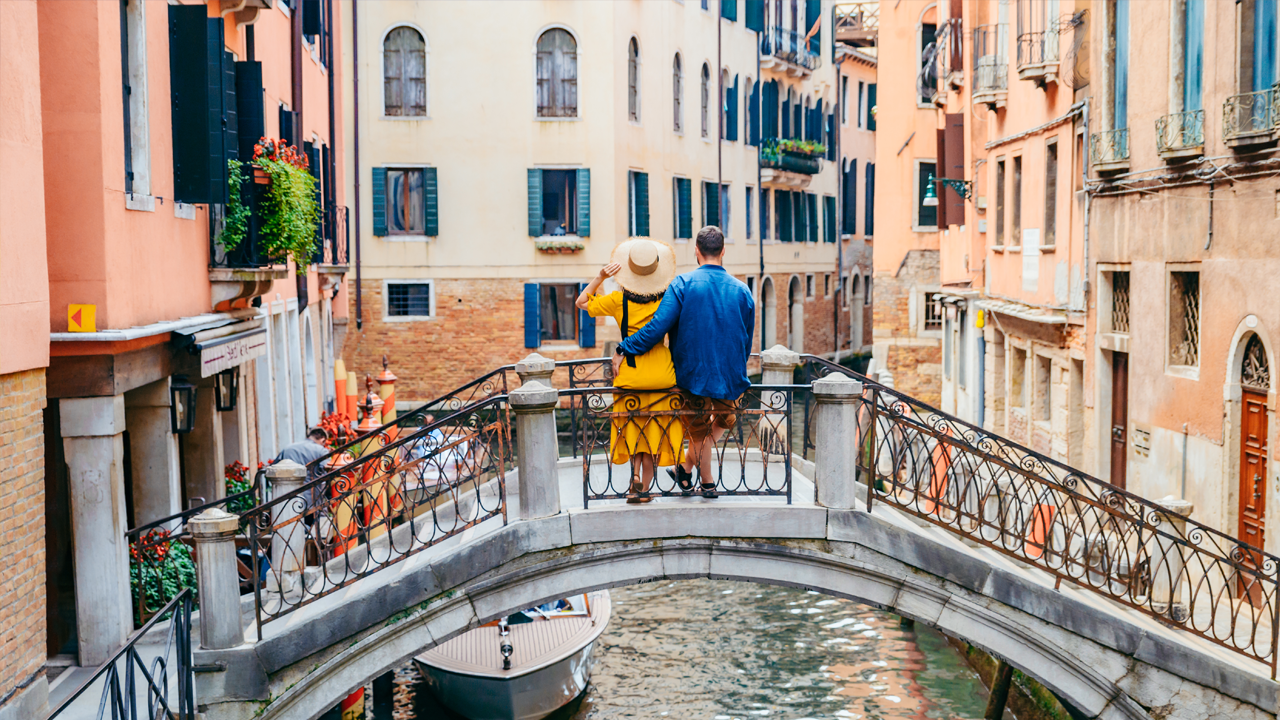
Italy provides its citizens with much more than the famous pizza, delicious pasta, and fine wine. The Italian Golden Visa grants access to a life filled with cultural richness and promising opportunities for those who hold it. The country provides an outstanding quality of life, combining modern living with eternal heritage that can be experienced in Tuscany’s rolling hills, as well as Milan and Rome.
More than 5.3 million foreign citizens were living in Italy[1] as of 2024, thus demonstrating its widespread appeal to international residents. The average monthly expenses for a person living in Italy, excluding rent costs approximately €884, which makes it more affordable than other Western European nations. The Golden Visa program allows residents to obtain Schengen residency while enjoying simplified European travel and the chance to live in a nation that prioritizes work-life balance and family time.
This article examines the advantages of living in Italy and how the Golden Visa residency program allows investors to leverage the promising opportunities and enjoy a comfortable lifestyle and long-term residency advantages.
Advantages of Living In Italy
Italy stands as an excellent choice for individuals who want to invest while enhancing their personal life. It provides an affordable residency program, moderate cost of living compared to other Western European countries, and visa-free assess to the Schengen zone. Here are the main benefits of living in Italy:
- Among the Least Expensive and Fastest Paths to European Residency
One of the main attractive advantages for foreign investors looking to live in Italy is its cost-effective residency option. The acquisition of Italy’s Golden Visa can be achieved through investing in innovative startups operating within the Italian market. The minimum investment requirement for applicants is €250,000 in an innovative startup. Investors can also put €500,000 into listed or unlisted shares of a company that operates in Italy. The Italian investor visa is considered one of the quickest and simplest Golden Visa programs available to applicants, as it requires approximately 3-4 months to be completed. The program enables eligible applicants to obtain EU residency after they gather all necessary documents within a few months. However, this processing time applies to residency permits and does not extend to citizenship applications.
- Cost of Living in Italy
Italy offers an affordable lifestyle compared to other Western European countries, making it an attractive option for expats, entrepreneurs, and digital nomads. One of the main factors that impact the cost of living in Italy is the location, as the cost is higher in major cities. This includes things like groceries, rent, and leisure activities. The estimated monthly cost[2] for a single person is $1,042 (€885) excluding rent, and for a family of four $3,665 (€3,110). Cost of Living in Italy is 11.2% lower than in France[3] (excluding rent), and 10.5% lower including rent. Moreover, the cost of living in Italy is $11.5 lower than in the US[4] (excluding rent), and 30.7% lower including rent. The average monthly net salary in Italy after tax is €1,645.
Rental prices in Italy may vary depending on the location and the size of the apartment. The rental cost of a one-bedroom apartment is €740 in the city center, and surges to €1,285 for a three-bedroom apartment. Outside the centers, the rental cost is €575 for a one-bedroom apartment and €950 for a three-bedroom apartment. For instance, in Rome[5], which is rich in green areas and cultural sites, the rental cost for a one-bedroom apartment is €1,160 in the city center, and €760 outside the center. However, the cost of rent in Milan is higher, reaching €1,380 for a one-bedroom apartment in the city center, and €990 outside the center.
The average price per square meter for an apartment in the city centre is €3,670 and decreases to €2,300 outside the center. Though the prices per square meter could reach up to €6,900 in Rome and €8,540 in Milan in the city center. The cost of a square meter in Italy is 33% lower than in France in the city center, and 39% lower than outside the center. However, when renting or purchasing a property in Italy, investors must consider the cost of utilities, including electricity, heating, cooling, water, and garbage, which is estimated at €195 per month.
Italy has a well-developed transportation system that includes trains, buses, and local public transport like metros and trams. Traveling by train in Italy is fast, efficient, comfortable, and convenient. The cost of a monthly pass is €37. The normal tariff for a taxi start is €5. The price of gasoline per liter is €1.78. For people who prefer owning their car, the cost of a Volkswagen Golf 1.4 90 KW trendline or equivalent new car is around €28,000. This price is 13% lower than in France.
- Member of the European Union
Thanks to its membership in the European Union and the Schengen Area, Italy provides extensive advantages to investors who possess residence permits. The Italian residence permit enables free travel throughout all Schengen zone member states. It grants European mobility to its holders so they can discover the entire continent.
Italy’s strategic location in the Mediterranean Sea creates an excellent environment for people to live. The country serves as the third-largest economic power in the EU. People who live in Italy benefit from excellent living conditions, along with superior educational facilities, healthcare services, and a distinctive lifestyle.
- World-class Healthcare Services
The Italian government operates a healthcare system that delivers equal medical care services to all citizens regardless of their financial situation. Italy’s healthcare system operates under the Beveridge model, which collects its funding through taxation. People who reside in Italy and pay taxes as income earners receive free access to public healthcare services. The healthcare system of Italy stands as one of the best in the world because it provides excellent medical care and full insurance benefits to its citizens and foreign residents.
- Stable Economy
Italy’s economy has shown resilience in recent years. Real GDP growth[6] is expected to stay at 0.7% in 2025 and increase to 0.9% in 2026. The economic growth will be sustained by domestic demand, especially through investments that stem from the Recovery and Resilience Facility (RRF) related spending. The inflation rate is anticipated to stay under 2% throughout 2025 and 2026 due to negative import prices and controlled domestic cost increases. The government deficit will decrease from 3.4% of GDP in 2024 to 3.3% in 2025 and 2.9% in 2026.
Italy’s Travel & Tourism[7] sector generated €215 billion, which represents 10.5% of the country’s total economic output during the previous year, thus demonstrating its vital role in the Italian economy. The sector created 185,000 new employment opportunities in 2023 while reaching its highest employment record, which now totals 2.97 million. The tourism sector in Italy presents attractive investment opportunities, according to current data.
The Italian tech ecosystem[8] achieved outstanding results in 2024 as companies obtained more than €1.3 billion in funding. The Italian innovation-driven industries demonstrate their growth through three key sectors that include fintech, software, and space sectors, which demonstrate financial technology advancement and digital transformation, and space exploration capabilities. Major cities, including Milan, Turin, and Rome, have developed into active centers for technology and entrepreneurial activities, with Milan taking the lead position to draw both domestic and foreign investments.
The banking sector[9] in Italy maintains stability while being modern and fully integrated into European financial operations. This sector hosts both international banks and domestic leaders, such as Intesa Sanpaolo and UniCredit, who maintain positions among Europe’s leading banking institutions. Italy made major progress in banking digitalization by creating efficient online banking systems, mobile applications, and fintech partnerships.
- Rich History and Stunning Architecture
Italy allows its citizens to experience historical landmarks and architectural masterpieces in their daily lives. The nation maintains its position as the former Roman Empire by connecting modern urban development with extensive historical treasures, which allow people to drink coffee near ancient archaeological sites while living in buildings that have survived for centuries. The three main architectural styles of Gothic, Baroque, and Neoclassical exist throughout the entire territory of Italy. The country functions as an open-air museum, which showcases its well-known landmarks such as the Pantheon, the Leaning Tower of Pisa, the Duomo Cathedral, and the Galleria Vittorio Emanuele II, while presenting numerous museums and palaces that share stories throughout. Italy provides its residents with a distinctive experience through the harmonious blend of cultural heritage and artistic expression, with a historical background.
- Safety and Stunning Natural Beauty
Italy is considered one of the safest European nations for tourists. The safety level in Italy remains high because violent crimes occur at lower rates than in most industrialized nations. The safety level in small towns is very high. According to the Global Peace Index, Italy was ranked[10] 33rd with a 1.66 score, placing it among the most peaceful countries.
Italy is also known for its natural beauty. The northern Dolomites meet the southern beaches of Sardinia, Apulia, and Sicily to create Italy’s breathtaking landscape. Moreover, its diverse landscape offers unlimited opportunities for outdoor activities.
- Great Food & Beverages
The Italian cuisine brings fresh ingredients with regional diversity and traditional cooking methods to create a festive dining experience. Handmade pasta from Bologna stands as a northern Italian specialty, while Neapolitan pizza cooked in wood-fired ovens and northern risottos display their distinct regional flavors. The fundamental elements of Italian dining consist of olive oil paired with herbs and cheeses, which elevate every meal, while Italian wines gain worldwide recognition for their exceptional food pairing abilities. The simple yet elegant nature of Italian cuisine becomes apparent through this experience of eating seafood by the Sicilian coast or enjoying Tuscan stew. Italian cuisine serves as more than food because it embodies a lifestyle that values family connections and seasonal produce, and communal dining enjoyment. Every bite tells a story of culture and passion.
- Calm and Peaceful Life
Life in Italy maintains a peaceful tempo, enabling people to fully experience their present moments. The natural flow of life guides people to adopt this rhythm because it prioritizes well-being above continuous activity. Italians prioritize the quality of life by selecting meaningful relationships, delicious food, and personal time instead of working long hours. Italy provides residents an opportunity to enjoy the slower pace of life through activities that include eating out at ease and walking through historic piazzas in tranquility. Living in Italy creates a balanced existence that brings both health benefits and happiness to our lives.
- Applying for Citizenship After 10 Years
The main benefit of living in Italy is gaining the opportunity to get full citizenship. After five years of legal residence in Italy, successful Golen Visa applicants can apply for a permanent residence permit. After ten years from the initial granting of the visa, investors may apply for citizenship by naturalization. However, applicants must demonstrate proficiency in Italian at a B1 level issued by accredited institutions such as Università per Stranieri di Perugia (CELI), Università per Stranieri di Siena (CILS), or Società Dante Alighieri (PLIDA).
Obtaining the Italian passport comes with several benefits, as it functions as one of the world’s strongest passports when citizenship acquisition occurs. Italy’s passport was ranked the 3rd globally in 2025, making it among the most powerful worldwide. The holders of this passport enjoy visa-free travel to 189 different countries.
For more information about the Italian Golden Visa and the requirements to gain residency, please contact us via WhatsApp.