

Driven by rising living costs and healthcare expenses, many American retirees are exploring Italy for retirement, making it the fourth most popular retirement destination in Europe, according to the Social Security Administration.
What makes Italy appealing for American retirees is not just its affordable cost of living compared to the US, but also its calm and relaxed pace of life, vibrant culture, pleasant climate, diversified lifestyle, and high quality of living. Moreover, Europe’s seamless connectivity allows American retirees to access several countries within a few hours and explore new cities and cultures.
Italy for Retirement: Key Statistics
The number of Americans who chose Italy for retirement grew a 6.7% in 2025, compared to the previous year, exceeding 17,000, according to the Istituto Nazionale di Statistica – Italia (ISTAT).
The number of American retirees receiving Social Security benefits in Italy reached 15,462, according to the Annual Statistical Supplement to the Social Security Bulletin 2025, representing 60% of the total number of Americans receiving Social Security in Italy. This reality makes Italy among the most concentrated areas for American retirees in Europe.
Italy for Retirement: 10 Reasons Why American Retirees Choose it
-
Visa and Residency Solutions for Retirees
Italy offers American retirees a flexible pathway to relocate and reside legally in the country, with the most common option being the Italy Golden Visa. This route allows individuals to obtain permanent residency in exchange for a financial contribution to the country’s economy. American retirees can choose from four investment options. This includes investing €250,000 in an innovative start-up, or €500,000 in an Italian limited company, or €2 million in government bonds, or €1 million in philanthropic donations. However, American retirees cannot purchase property to qualify for the Italian Golden Visa program.
The Italy Golden Visa grants a 2-year residence permit, which can be extended for three years after making a qualifying investment without any minimum residency requirements. The application process is fast and straightforward, as it can be completed within three months starting from the application date.
The Italian Elective Visa is another option to obtain a residency permit for one year, renewable for five years. It is provided to individuals with a consistent source of passive income, typically around €31,000 per year for a single person and €38,000 for married applicants. To qualify, applicants are required to provide proof of private health insurance that covers at least €31,000 and accommodation in Italy. Applicants are not allowed to work under this type of visa.
-
Lower Cost of Living Compared to the US
American retirees are increasingly looking for alternative destinations where living costs are more manageable, and Italy is considered a suitable option. Cost of living in the US is 11.3% higher than in Italy, excluding rent, according to Numbeo. The cost becomes 28% higher when including rent. Rental prices in the US are 91% higher than in Italy, restaurant prices 11%, and gorceries 16% higher. The monthly fee per child for a private full-day preschool or kindergarten in Italy is around $600, while it surges to $1,500 in the US. The average monthly net salary in Italy is around $2,000, while it reaches $4,300 in the US. These reasons combined are encouraging Americans to move to Italy.
Here is a table showing the average cost of living in Italy as an American
| Item | Average Price in Italy | Average Price in US |
| Inexpensive Meal | €17 | €17 |
| Montly Transport Pass | €39 | €55 |
| Gasoline (1 l) | €2 | €1 |
| Rent for One Bedroom Apartment – City Center | €750 | €1,415 |
| Rent for One Bedroom Apartment – Outside Center | €570 | €1,150 |
| Basic Utilities for 85 m2 apartment | €200 | €185 |
| Internet (60+ Mbps, Unlimited) | €27 | €63 |
| Private Full-Day Preschool, Monthly Fee per Child | €490 | €1,250 |
| Average Monthly Net Salary | €1,700 | €3,700 |
-
Affordable Healthcare Services
Americans’ trust in the US healthcare system has declined significantly, as they question whether their medical needs will be met in the long term. These growing concerns are related to the rising costs of medical services, complex insurance structures, and the uncertainty around the sustainability of programs such as Medicare and Medicaid. This is pushing American retirees, who eventually become in dire need of medical services, to look for reliable and accessible healthcare systems. Italy stands out in this context, due to its well-developed public healthcare system, and lower expenses.
Italy is recognized by the World Health Organization as one of the best healthcare systems globally, providing excellent medical care and full insurance benefits to its citizens and foreign residents. Italy’s healthcare system operates under the Beveridge model, which collects its funding through taxation. People who reside in Italy and pay taxes as income earners receive free access to public healthcare services.
-
Calm and Peaceful Lifestyle
Retirees wishing to escape the fast-paced rhythm and the hustle and bustle of some American cities can enjoy a peaceful, enriching, and tranquil lifestyle in Italy. With its picturesque landscape, unique blend of culture, and stunning beaches on the Mediterranean, Italy offers American retirees an exceptional quality of life. Whether they choose to settle in a vibrant coastal town, a charming countryside village, or a historic city, retirees can embrace a lifestyle that prioritizes wellbeing, leisure, and meaningful social connections.
Retirees can explore Italy’s rich historical heritage, cultural festivals, world-renowned museums, and iconic landmarks. Apart from its cultural treasures, the country is home to breathtaking landscapes such as Tuscany’s hills, the tranquil lakes of the North, the coastline of the Amalfi, and the stunning beaches of Sardinia. With its pleasant climate and strong community connections, Italy provides an ideal destination for a fulfilling and enriching retirement.
-
Tax Treaty Benefits
Choosing Italy for retirement offers appealing tax benefits for new residents, making it a good choice for retirees. Italy’s lump sum tax regime, also named “new resident” regime, allows US investors to simplify and cap taxation of foreign-sourced income while residing in Italy. This model covers dividends, interest, pension, rental income, and foreign assets for inheritance purposes. Participants gain exemption from Italian wealth taxes on foreign real estate and financial assets held abroad. Italy sets the flat tax at €300,000, with the program available for up to 15 years.
To benefit from this tax model, applicants must have been non-tax residents in Italy for at least nine of the previous ten years and become Italian tax residents. The regime applies only to foreign income, while Italian-sourced income remains subject to ordinary taxation, including regional and municipal taxes. Income earned in Italy faces standard progressive rates up to 43%.
Family members can also benefit from this tax regime. The flat tax for qualifying relatives is €50,000 per person. If individuals transferred their tax residence before a rate hike took effect, they continue paying the rate in force at the time of their relocation for the full 15-year duration of the program.
Americans can also benefit from the US-Italy tax treaty, which is designed to prevent double taxation, reduce tax barriers, and encourage trade and investment between the two nations through income tax treaties. The treaty’s provisions cover various income types, from business profits to pensions, making it an essential tool for individuals and businesses with ties to both nations.
-
Robust Expat Community
The strong American expat community is one of Italy’s major attractions. The steady growth in the network of American retirees who choose Italy for retirement, along with the investors settling across the country, creates a support system that fosters social connections and integration. New retirees coming to Italy can feel at home, as they can connect and share meals, coffee breaks, and evening strolls with the expat community.
-
Safety & Security
Italy is widely considered one of the safest countries in Europe, as violent crime rates are low, communities are strong, and daily life is generally stable and predictable. Safety varies by region, city size, neighborhood, and lifestyle. According to the Global Peace Index, Italy was ranked 33rd with a 1.66 score, while the United States was ranked 128 with a 2.443 score. This ranking places Italy among the most peaceful countries.
-
Warm Climate & Welcoming People
Italy’s warm climate and stunning scenery on the Mediterranean are among the main reasons why people prefer retirement in Italy . The northern Dolomites meet the southern beaches of Sardinia, Apulia, and Sicily to create Italy’s breathtaking landscape. Italy has a long history of regional hospitality and strong family values, which helped boost an openness to visitors and newcomers, and made it easy for many foreigners to feel integrated.
-
Free Movement Across Europe
Having spent decades of hard work and dedication, American retirees who choose Italy for retirement can finally focus on embracing a new chapter of life. Being in Italy, they can take advantage of freedom of movement across Europe to explore its diverse culture, historic cities, and iconic landmarks just a short journey away.
-
Outstanding Cuisine
The Italian cuisine is renowned for its fresh ingredients and traditional cooking methods, creating an exceptional dining experience. American retirees can enjoy handmade pasta, Neapolitan pizza, and northern risottos, as well as Italian wine. The simple, yet elegant nature of Italian cuisine becomes apparent through the experience of eating seafood by the Sicilian coast or enjoying Tuscan stew. Italian cuisine serves as more than food because it embodies a lifestyle that values family connections, seasonal produce, and communal dining enjoyment.

Key Considerations for Choosing Italy for Retirement
For American choosing Italy for retirement, there are various key factors that they should take into consideration to ensure a smooth relocation and long-term settlement.
Residency Pathway
One of the most common options for obtaining residency in Italy is the Golden Visa program. To qualify for this program, Americans are required to invest worth €250,000 in an innovative start-up, or €500,000 in an Italian limited company, or €2 million in government bonds, or €1 million in philanthropic donations. This route is popular among non-EU retirees due to its flexibility and minimal stay requirements compared to other visa types.
Access to Healthcare Services
Italy’s national healthcare system becomes accessible to Golden Visa holders after gaining their residency. All citizens and legal residents have access to the Servizio Sanitario Nazionale (SSN), which automatically covers citizens and legal foreign residents. This allows residents to receive free primary care from hospitals, specialty care, home care, and preventative medicine throughout Italy. However, patients should wait for long periods if they want to receive a non-urgent treatment. Therefore, they can choose private healthcare with their health insurance, which remains more affordable compared to the US healthcare system.
Language Constrains
The more Americans go away from city centers, the less likely they are to come across English-speaking people. If retirees feel it is hard to learn some basic Italian words, it will be better for them to live in places where expats live, such as Rome, Florence, and Milan.
Code Fiscale
Having a Code Fiscale, which is a personal tax number issued by the Agenzia delle Entrate based on the individual’s personal data, such as the full name, date of birth, and place of birth, may simplify the administrative process. However, it is not strictly required, and individuals do not necessarily need to be in Italy to obtain one. They can submit it through Italian consulates abroad. Once assigned, the Code Fiscale is permanent.
Taxes Applied
American retirees officially registered as Italian residents are counted as tax residents. Therefore, Italy imposes taxes on its worldwide income, including retirement income, social security benefits, and retirement funds from the US. Income tax rates are at 23% for income up to €28,000, 35% for income between €28,001 and €50,000, and 43% for income above €50,000. In addition to the income tax, residents are required to pay regional taxes ranging from 1.23% to 3.33%, and municipal taxes up to 0.9%, depending on the place they reside.
Retirees who transfer their tax residence to certain small municipalities in the southern regions can apply for a 7% flat tax on all foreign source income, including pensions.
It is worth noting that moving to Italy for retirement does not exempt retirees from their US tax liabilities. US citizens have to pay taxes on their worldwide income regardless of where they reside. Therefore, retirees must continue filing their tax returns.
Residency Renewal and Long-Term Path
Residency permits require periodic renewal, and over time, this route can lead to permanent residency or citizenship eligibility, depending on the route chosen.
Best Destinations in Italy for Retirement
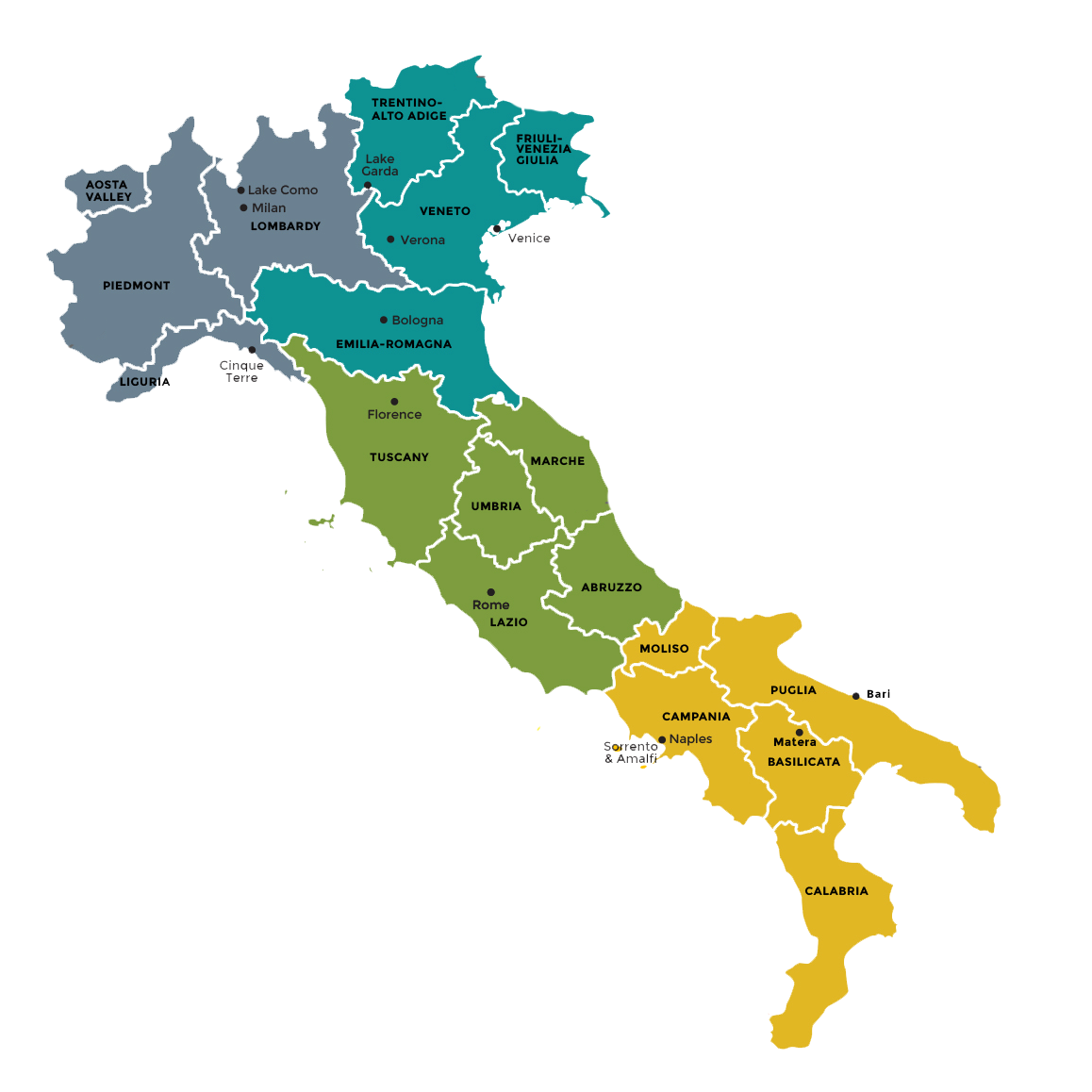
US expats usually choose Rome, Milan, or Florence, depending on their budget and lifestyle priorities. However, for those who want a charming seaside town, Puglia, which is known for its dramatic cliffs and clear Adriatic water, is considered ideal for them. It is also affordable for a retiree to live. While Sardinia is for luxury travelers, other areas such as Nuoro and Oristano prove an affordable alternative to expat retirees.
Calabria, located in the South, is also an affordable option for retirees and stands out with its breathtaking coastlines, mountains, and villages. Abruzzo in Southern Italy is a perfect balance, combining mountains, forests, and a long coast. It is also affordable for retirees seeking a quiet, charming place. Sicily is one of the least expensive places to live in Italy, bringing together history, culture, and beautiful beaches.
For more information about the Italy Golden Visa, please contact us via WhatsApp.
https://www.ssa.gov/policy/docs/statcomps/supplement/2025/supplement25.pdf
https://titanwealthinternational.com/learn/italy-lump-sum-tax/
https://countryeconomy.com/demography/global-peace-index/italy
https://taxsummaries.pwc.com/italy/individual/taxes-on-personal-income